
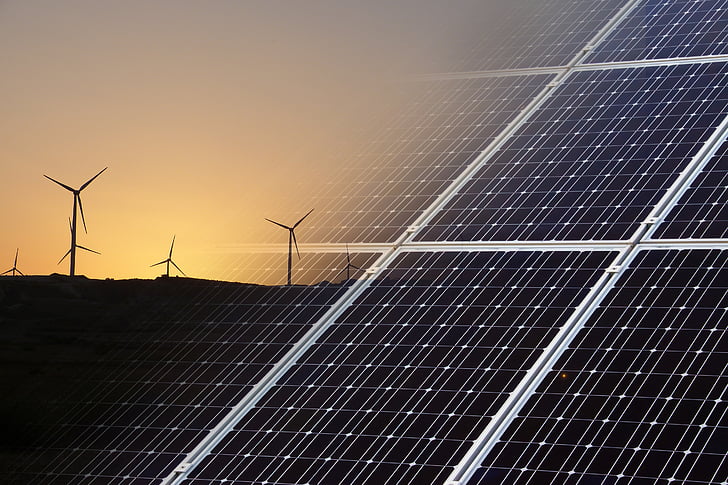
2. What kind of advanced capabilities are the 5 Renewable Energy Advocacy Groups gaining from the use of ERP systems?
Qu'est-ce qu'un système ERP pour les groupes de défense des énergies renouvelables ?
An enterprise resource planning system, or ERP system, is software used by Renewable energy advocacy groups to automate and manage financial, managerial, and operational processes. This system provides tools to capture and consolidate data into reports on all aspects of the business. An ERP system helps you keep organized and handle day-to-day business needs to easily and effectively manage business operations.
Why You Need Renewable energy advocacy groups ERP System
Renewable energy advocacy groups need an ERP system to help them become competitive and successful. An ERP system provides the essential tools needed for efficient business management, including an accounting system, payroll, human resources, customer relationship management, project management and supply chain management. An ERP system also helps automate repetitive tasks, provides better decision-making insights, reduces manual data entry and helps ensure accuracy and accuracy in financial data.
Top Renewable Energy Advocacy Groups ERP System Features To Look For
- Comptabilité et finances – A good ERP system should offer full accounting and financial statements, including accounts payable and receivable, budgeting, and general ledger.
- Paiements – An ERP system should make payroll processing easy, with automated tax filing, payment processing and sick day tracking.
- Ressources humaines – Automated onboarding and personnel management are essential features in an ERP system, enabling Renewable energy advocacy groups to maintain accurate personnel records and track important employee information.
- Gestion de la relation client (CRM) – An ERP system should provide easy access to customer information and enable Renewable energy advocacy groups to capture new leads and track sales opportunities.
- Gestion de projet – Automated project management tools give Renewable energy advocacy groups the power to track progress, budgeting and scheduling tasks.
- Gestion de la chaîne d'approvisionnement – An ERP system should provide the resources to manage vendor relationships, track inventory and forecasting, and automate the procure-to-pay process.
Budgétisation de votre système ERP pour les groupes de défense des énergies renouvelables
Every ERP system comes with its own costs. Renewable energy advocacy groups should consider both the purchase cost and ongoing license fees associated with the platform and be sure to allocate funds for ongoing training, support, maintenance and upgrades. An ERP system is a significant investment, but one that pays off in the long run.
Étapes à suivre pour trouver et démarrer votre système ERP pour les groupes de défense des énergies renouvelables
- Research different ERPs available, noting features, costs and ease of use.
- Evaluate ERPs to find the right one with comparison tables and demos.
- Set aside budget and resources for implementation and support.
- Create a timeline and plan for implementation, testing and training.
- Migrate data and begin using the ERP system.
The Best 5 Renewable Energy Advocacy Groups ERP System on the Market
Odoo
- Avantages : Odoo offers an all-in-one solution for Renewable energy advocacy groups, with a comprehensive suite of modules to meet their needs. Plus, Odoo’s wide range of features and customizations make it an ideal solution for small businesses, as well as large enterprises.
- Inconvénients : Odoo has a steep learning curve with no free trial, so it may be difficult to learn and use. Additionally, the cost may be too much for some small businesses.
ERPnext
- Avantages : ERPnext is a cloud-based ERP system offering powerful modules and budget-friendly pricing options. ERPnext offers a free trial, allowing Renewable energy advocacy groups to test out the platform before committing to purchase.
- Inconvénients : ERPnext may not be suitable for larger organizations with more complex business processes, due to its limited modules.
SAP Business One
- Avantages : SAP Business One is the perfect ERP system for larger organizations, offering real-time access to key financial data and powerful business intelligence tools.
- Inconvénients : SAP Business One is expensive, with a steep learning curve and limited features for small- to medium-sized Renewable energy advocacy groups.
Netsuite
- Avantages : Built on the cloud, Netsuite offers fast deployment, plenty of private access and an impressive array of features.
- Inconvénients : The cost is a bit high and it may require some customization to fit the needs of Renewable energy advocacy groups.
Acumatica
- Avantages : Acumatica provides comprehensive ERP features such as powerful reporting and financial planning, a flexible and secure cloud-based system and automated data integration.
- Inconvénients : Acumatica lacks some key features such as integrated customer service capabilities, making it a less than ideal choice for Renewable energy advocacy groups.
Tableau récapitulatif du système ERP et de ses principales caractéristiques
| Système ERP | Caractéristiques |
|---|---|
| Odoo | All-in-one solution, Comprehensive suite of modules, Wide range of features and customizations |
| ERPnext | Cloud-based ERP system, Powerful modules, Budget-friendly pricing options, Free trial |
| SAP Business One | Real-time access to key financial data, Powerful business intelligence tools, Expensive, Limited features for small- to medium-sized Renewable energy advocacy groups |
| Netsuite | Cloud-based, Fast deployment, Plenty of private access, Impressive array of features, High cost |
| Acumatica | Comprehensive ERP features, Flexible and secure cloud-based system, Automated data integration, Lack some key features |
Conclusion
ERP systems provide Renewable energy advocacy groups with essential tools to help them become competitive and successful. Selecting the right ERP system is essential, and each solution comes with its own advantages and disadvantages. Odoo is a good choice for small to medium-sized businesses, while SAP Business One and Acumatica are great options for larger organizations. Taking the time to evaluate each ERP system and budgeting for implementation and support will ensure Renewable energy advocacy groups find the right ERP solution for their needs.
 English
  French
  Spanish
  Arabic